

Cage aquaculture in Lake Victoria, Tanzania, has expanded rapidly over the past decade, providing livelihoods and contributing to national fish supply. However, this intensification has been accompanied by increasing disease outbreaks that threaten productivity, fish welfare, and farmer incomes. This study investigated the major bacterial pathogens responsible for infectious diseases in cage-farmed Nile tilapia (Oreochromis niloticus) in the Lake Victoria Basin (LVB) and assessed their pathogenicity and genetic relatedness across farming districts.
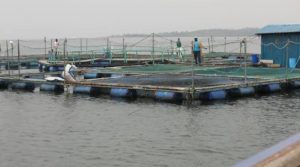
A cross-sectional survey was conducted between November and December 2024 in six major cage-farming districts along the Tanzanian shoreline of Lake Victoria: Nyamagana, Sengerema, Busega, Rorya, Musoma Municipal Council, and Musoma District Council. A total of 90 clinically diseased or moribund tilapia were purposively sampled from 30 cage farms. Liver and kidney tissues were collected and subjected to bacteriological isolation using standard culture techniques, followed by biochemical profiling and molecular identification based on 16S rRNA gene sequencing.
Three major pathogenic bacteria were identified: Pseudomonas aeruginosa, Citrobacter freundii, and Streptococcus agalactiae. Among these, P. aeruginosa was the most prevalent pathogen, accounting for 25% of all isolates, followed by C. freundii (19.6%) and S. agalactiae (17.9%). Several non-pathogenic or opportunistic bacterial genera were also detected, including Enterobacter, Escherichia, Pantoea, and Leclercia. Molecular analysis confirmed high genetic similarity within each pathogenic species, with sequence identities exceeding 98.7%, indicating reliable species-level identification.
Pathogenicity trials were conducted under controlled conditions to determine the virulence of the three main pathogens. Healthy Nile tilapia were experimentally challenged with each bacterium and monitored for 14 days. The results revealed marked differences in pathogenicity. P. aeruginosa caused the highest cumulative mortality (86.7%) and the shortest median lethal time (LT₅₀ ≈ 5 days), demonstrating its high virulence and rapid disease progression. C. freundii induced moderate mortality (53.3%) with a slower disease course, while S. agalactiae resulted in lower mortality (40%) but caused severe clinical signs such as eye damage and scale loss, which may have long-term effects on fish growth and feeding efficiency.
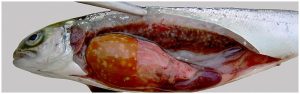
 Clinical and post-mortem examinations showed consistent disease manifestations across farms, including hemorrhagic septicemia, fin rot, skin ulcers, scale loss, exophthalmia, and internal organ damage. Phylogenetic analysis further demonstrated that isolates of the same bacterial species clustered together regardless of geographic origin. This suggests the circulation of genetically similar strains across multiple districts, likely facilitated by shared water bodies, fish movement, equipment exchange, and inadequate biosecurity practices.
This study provides the first comprehensive molecular and pathogenicity-based evidence that cage-farmed tilapia in Lake Victoria are affected by a limited number of highly virulent and genetically conserved bacterial pathogens. The findings highlight the urgent need for coordinated, basin-wide disease surveillance, harmonized biosecurity measures, farmer training, and routine pathogen screening. Such integrated approaches are essential to reduce disease transmission, minimize economic losses, and support the sustainable growth of cage aquaculture in the Lake Victoria Basin.
For more reading:
Ndaro, M. E., Saiperaki, J. L., Mzula, A., Materu, S., Funga, A., Mwang’onde, B. J., Mwakosya, C. A., & Rumisha, C. (2026). Molecular characterization and pathogenicity assessment of bacteria causing infectious diseases in cage-farmed fish in the Lake Victoria. Tanzania Veterinary Journal, 40(2), 14-28. https://doi.org/10.4314/tvj.v40i2.2

The Department of Animal, Aquaculture, and Range Sciences
The College of Agriculture, Sokoine University of Agriculture
Share this page